Beyond Closed Captions: The Push for American Sign Language in Media and Entertainment
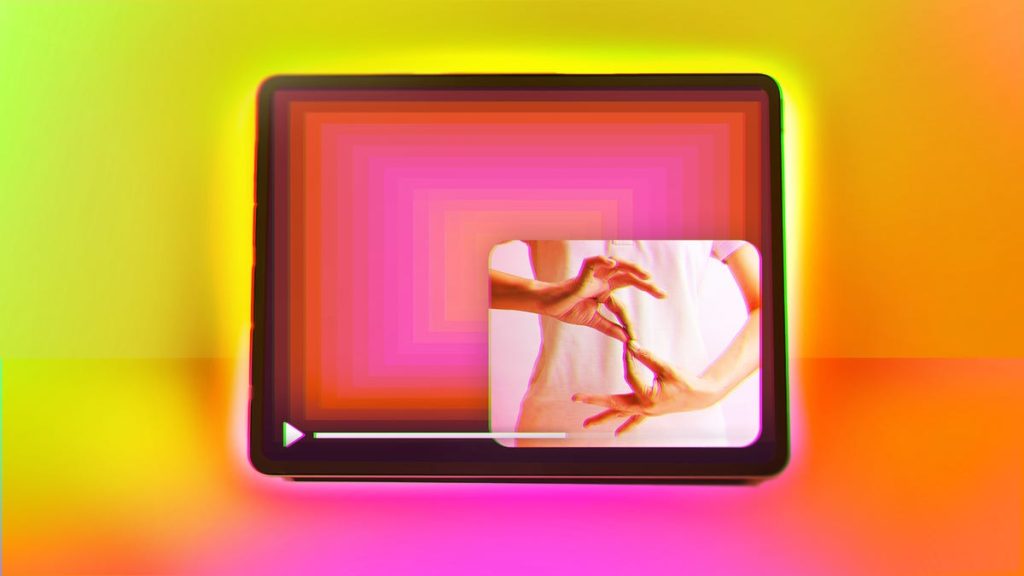
The summer 2023 release of the Barbie film created a massive cultural moment, generating widespread social media discussion and becoming a defining pop culture event. However, many viewers found themselves unable to fully participate in this shared experience.
Though movie theaters sometimes provide closed captioning screenings, American Sign Language serves as the primary communication method for numerous deaf and hard-of-hearing individuals across the United States and certain Canadian regions. When HBO Max later introduced an ASL-interpreted version of Barbie, it represented a significant advancement in media accessibility.
This ASL version allowed viewers to catch humor they had previously missed during theatrical screenings. Family members expressed relief at no longer needing to position themselves in front of televisions to manually interpret entire films for their children. The platform has subsequently expanded its ASL offerings to include titles such as The Last of Us, Superman, and One Battle After Another.
According to Naomi Waibel, who oversees HBO Max’s accessibility initiatives and collects user feedback, the release sparked meaningful conversations online. Viewers frequently questioned why closed captioning wasn’t sufficient for their needs.
This inquiry highlights both the importance of sign language options and their scarcity in streaming platforms and traditional television programming. While closed captioning serves as an accessibility tool that has become standard viewing practice, it cannot replace the emotional depth and expression that sign languages like ASL provide.
Nakia Smith, a fifth-generation deaf storyteller and one of four interpreters for HBO Max’s It: Welcome to Derry series, explains that ASL represents the primary language for the deaf community.
Shifting from Basic Access to True Inclusion
The World Health Organization reports that approximately 430 million individuals worldwide experience some degree of hearing loss. Technology companies have responded by developing various accessibility features, including real-time captioning on smartphones, smart speakers, and devices that alert users to critical environmental sounds like emergency sirens or vehicle horns. Streaming services have also implemented AI technology to enhance dialogue clarity over background audio elements.
While closed captioning has become nearly universal across television and streaming platforms, ASL content remains relatively rare. Creating sign language interpretation requires skilled professionals who can accurately convey linguistic context and subtleties, demanding additional time and resources.
Blake Nitko, social media manager at the National Technical Institute for the Deaf at Rochester Institute of Technology, distinguishes between access and inclusion. He notes that captions provide word access while ASL offers meaning access, transforming the viewing experience from merely accessible to truly inclusive. Rather than dividing attention between reading text and watching content, viewers can engage naturally in real-time.
ASL is gradually appearing in more venues, from sports broadcasting to awards ceremony coverage and major events like the Super Bowl halftime show. Mobile devices are proving particularly valuable as accessibility tools. New York City recently piloted a program connecting public transit users to live ASL interpreters through a mobile application, while services like Aira ASL provide on-demand interpreter access.
These resources benefit not only deaf and hard-of-hearing individuals but also anyone who uses sign language, including parents communicating with young children and those who struggle with English reading or writing, according to Ariel Simms, president and CEO of Disability Belongs, a nonprofit promoting accessibility inclusion.
Creating Representation That Resonates
HBO Max’s accessibility team strategically prioritizes adding sign language to culturally significant titles like Barbie and Sinners, according to Waibel. The platform deliberately releases ASL and standard versions simultaneously to demonstrate that accessibility isn’t an afterthought. The team collaborates closely with disability advocacy organizations and groups like Deaf West Theatre to recruit signing talent and ensure authentic representation.
The HBO Max original series It: Welcome to Derry features ASL performers from diverse backgrounds, including Otis Jones, who has also interpreted titles such as One Battle After Another and Godzilla x Kong: The New Empire. Jones gained national recognition for his ASL performance during Kendrick Lamar’s 2025 Super Bowl halftime show.
Jones explains that signing actors face unique challenges compared to voiceover performers, as they must interpret multiple characters, background sounds, and musical elements simultaneously. Despite these difficulties, he finds the work deeply meaningful and personally fulfilling.
Racial and ethnic diversity plays a crucial role in ensuring various deaf and hard-of-hearing viewers feel represented. Jones, who is Black, attended mainstream schools and had limited exposure to other deaf individuals during his youth. He emphasizes that diverse signing actors help audiences feel more connected to the content.
Smith utilizes Black American Sign Language in both Welcome to Derry and Sinners. BASL developed as a distinct dialect largely due to historical segregation in the South and continues to be used today. It typically features more expressive movements, uses two-handed signs where ASL might employ one-handed variants, and frequently incorporates elements from African-American Vernacular English.
Smith describes BASL as having distinctive characteristics and emphasis compared to standard ASL. In Welcome to Derry, each signing actor contributes cultural authenticity and personal perspective to their scenes, with performers matched to characters sharing similar backgrounds.
Technology Bridging Accessibility Gaps
Mariella Satow began learning ASL during COVID-19 lockdowns and became increasingly aware of limited accessible entertainment options. Through conversations with deaf community members, she discovered that closed captions weren’t universally effective, particularly for deaf children who hadn’t yet learned to read or couldn’t keep pace with caption speed, and deaf adults who preferred consuming content in their native language.
In 2021, Satow launched SignUp Media, a Chrome extension that overlays sign language interpreters onto content from streaming platforms including Netflix, Disney Plus, and Peacock. SignUp now serves 25,000 weekly active users and has translated over 350 hours across multiple sign languages including ASL, British Sign Language, and Indian Sign Language.
By developing SignUp as a third-party Chrome extension, Satow avoided the need for direct streaming platform partnerships. Users can download the extension and activate it for supported content, browsing available titles or searching for specific ones. The interpreter window is movable and resizable, playing alongside selected content.
Initially, Satow selected films based on personal childhood favorites like Toy Story and The Incredibles. Community requests now drive most content selection, with users able to request shows and movies that lack ASL interpretation.
Trista Sewell, whose 5-year-old daughter Skylar is deaf, reports that her family can now watch and discuss movies comprehensively using the SignUp extension. This proves particularly valuable since her young daughter cannot yet read, and ASL’s expressive nature helps convey context even when new signs appear.
SignUp employs several hundred contracted interpreters, approximately 90% of whom are deaf. The service remains free, with no plans for monetization, as Satow believes charging the deaf community for language access creates additional barriers.
Like HBO Max, SignUp matches interpreters with projects reflecting their personal or cultural backgrounds, such as having a deaf chef interpret Ratatouille or a deaf Pacific Islander performer sign Moana.
SignUp Co-CEO Harriet Seitler expresses confidence that sign language will become ubiquitous, viewing it not as accommodation but as language recognition.
Future Accessibility Developments
Mobile devices represent powerful accessibility tools. The Aira Explorer app has connected blind and low-vision individuals with live visual interpreters for over a decade, now expanding to offer ASL interpretation as well.
Through partnerships with airports, universities, and retailers, deaf and hard-of-hearing individuals can access on-demand interpreters for free through the Aira ASL app, facilitating communication with staff and others nearby.
Henri Grau, Aira’s director of deaf community engagement, describes the service as empowering, allowing users to feel more independent knowing interpreter assistance is readily available.
While AI advancements might eventually enable sign language communication with smart devices, Grau notes significant challenges in developing AI-based ASL interpretation due to the language’s numerous variations and acquisition differences within the deaf community.
Satow emphasizes that entertainment content should always employ human interpreters to effectively convey emotion, though AI interpreters might someday assist with educational and training content accessibility.
Major televised events including the Daytime Emmy Awards and Oscars have added ASL livestreams. The Recording Academy has partnered with disability advocacy groups to bring ASL interpreters to Grammy red carpet coverage, though full ceremony ASL livestreams remain unavailable.
Nitko believes that when companies invest in ASL content, they’re expanding access while acknowledging a long-overlooked language, culture, and community. He sees current technological capabilities making ASL integration more feasible than ever, with the primary question being industry readiness to treat ASL as equal to spoken language in entertainment.