
Stellar Evolution Mysteries: How Massive Black Holes Form Against All Odds
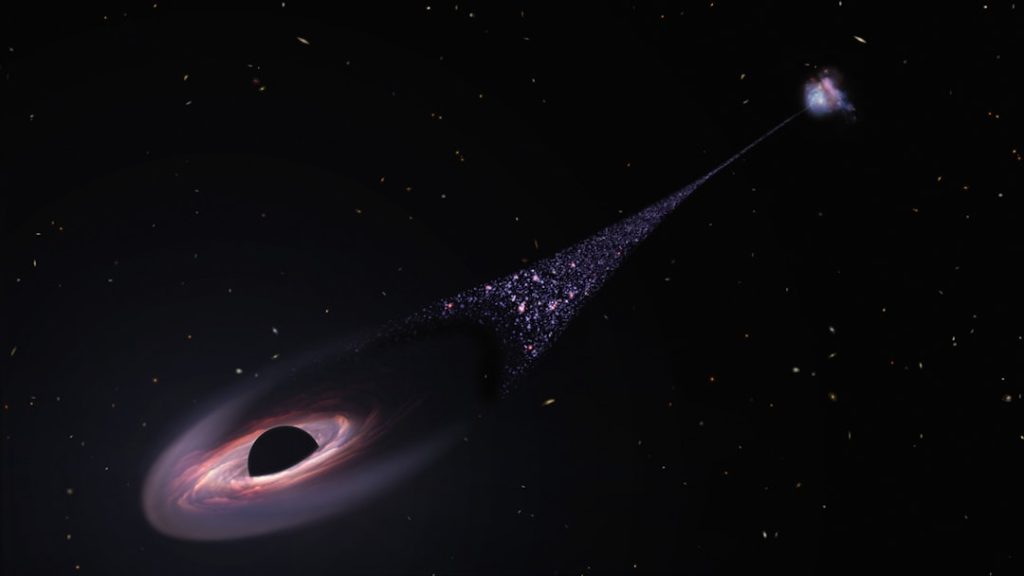
The cosmos continues to challenge our understanding of physics, particularly when it comes to the formation of black holes that theoretically shouldn’t exist. Recent scientific breakthroughs have finally shed light on why we observe these seemingly impossible celestial objects throughout the universe.
What makes these black holes so puzzling is their extraordinary mass. According to traditional stellar evolution models, stars above a certain mass threshold should collapse completely during their death throes, leaving nothing behind—not even a black hole. Yet astronomers have detected numerous black holes with masses that fall squarely in this “forbidden” range.
I find this discovery particularly fascinating because it demonstrates how nature consistently finds ways to circumvent our theoretical limitations. The research reveals that stellar winds—powerful streams of particles ejected from dying stars—play a crucial role in this process. These winds can strip away enough material to bring a massive star back within the range where black hole formation becomes possible.

The Physics Behind the Phenomenon
The key lies in understanding how stars lose mass throughout their lifetimes. Massive stars don’t simply burn through their fuel and collapse; they actively shed material through intense stellar winds. This process becomes especially pronounced in the final stages of stellar evolution, when nuclear fusion can no longer sustain the star against gravitational collapse.
For astrophysicists and space enthusiasts, this revelation is groundbreaking. It means our models of stellar death need significant revision, and it opens up new possibilities for understanding how black holes of various sizes populate the universe. However, for the general public, the practical implications remain limited—this is primarily an academic breakthrough that advances our theoretical knowledge.
Implications for Future Research
What excites me most about this discovery is its potential to revolutionize our approach to studying stellar remnants. Researchers can now better predict which stars will produce black holes and which will result in complete stellar disruption. This knowledge proves invaluable for gravitational wave astronomy, where understanding black hole populations helps scientists interpret the signals from merging black holes.

The findings also suggest that the universe may contain far more black holes than previously estimated. If stars that were thought to destroy themselves completely can actually form black holes under the right conditions, then our census of these objects needs updating.
For professional astronomers and graduate students in astrophysics, this research provides essential insights for career development and research direction. However, amateur astronomers and casual space enthusiasts might find the technical details less immediately relevant to their interests, though the broader implications about cosmic evolution remain universally captivating.
This breakthrough ultimately reinforces a fundamental truth about scientific discovery: the universe consistently proves more complex and surprising than our models predict, and that’s precisely what makes studying it so rewarding.
Photo by NASA Hubble Space Telescope on Unsplash
Photo by BoliviaInteligente on Unsplash